

In today’s rapidly evolving industrial world, automation has become the backbone of efficiency, safety, and productivity. At the heart of this transformation lies the Field Automation Engineer (FAE) — a professional responsible for designing, implementing, and maintaining automated systems in industries such as oil & gas, chemical, power generation, HVAC, marine, and pharmaceuticals.
With the rise of Industry 4.0, Industrial IoT (IIoT), and smart manufacturing, the role of a field automation engineer is more critical than ever. These engineers bridge the gap between theoretical design and on-field execution, ensuring that process control instrumentation, automation devices, and digital technologies work seamlessly to deliver real-world industrial results.
In this blog, we’ll explore:
- Who a field automation engineer is and why they matter.
- Key responsibilities and skills needed.
- Tools, devices, and instrumentation they rely on.
- Real-world applications across multiple industries.
- The impact of field automation on safety, efficiency, and sustainability.
- Why choosing the right instrumentation partner (like Japsin Instrumentation) empowers engineers to perform at their best.
Table of Contents
Who is a Field Automation Engineer?
A Field Automation Engineer is a specialized professional in the domain of industrial automation and process control. Unlike design or R&D engineers, FAEs work directly on-site to implement automation systems, calibrate instruments, troubleshoot devices, and ensure smooth plant operation.
They are the first line of defense when systems fail and the last line of quality assurance before production begins. Essentially, they act as both technologists and problem-solvers, balancing deep technical knowledge with practical, on-field expertise.
Core Responsibilities of a Field Automation Engineer
Field automation engineers wear multiple hats depending on the industry and project requirements. Some of their key responsibilities include:
1. System Design and Configuration
- Designing automation systems for process industries.
- Configuring PLCs, SCADA systems, and distributed control systems (DCS).
- Selecting the right instrumentation (pressure, temperature, flow, level, etc.) for the process.
2. Installation and Commissioning
- Supervising the installation of field instruments like pressure gauges, rotameters, transmitters, and sensors.
- Testing and commissioning automation systems before handing over to operations teams.
3. Calibration and Maintenance
- Performing routine calibration of instruments like dead weight testers, temperature calibrators, and signal generators.
- Ensuring accurate measurement and control to maintain product quality and compliance.
4. Troubleshooting
- Diagnosing problems in sensors, actuators, controllers, or communication systems.
- Using diagnostic tools to quickly resolve downtime issues.
5. Integration with Industry 4.0
- Implementing IIoT-enabled devices for real-time data collection.
- Connecting smart instrumentation to central control rooms or cloud platforms.
6. Compliance and Safety
- Ensuring adherence to ISO, IEC, ATEX, and SIL standards.
- Maintaining safety of workers and systems by preventing overpressure, leaks, or temperature deviations.
Skills Required to Succeed as a Field Automation Engineer
The role demands a unique blend of technical expertise, analytical thinking, and hands-on problem-solving skills.
Technical Skills
- Knowledge of PLC, SCADA, and DCS systems.
- Proficiency in instrumentation: pressure sensors, flow meters, temperature gauges, level transmitters, and calibration devices.
- Familiarity with communication protocols: Modbus, Profibus, HART, Ethernet/IP.
- Ability to interpret P&ID (Piping and Instrumentation Diagrams).
Soft Skills
- Strong analytical and troubleshooting ability.
- Communication skills for coordinating with operators, management, and vendors.
- Adaptability to work in diverse environments (chemical plants, offshore rigs, pharma cleanrooms, etc.).
Digital Skills
- Knowledge of Industrial IoT platforms and cloud analytics.
- Data interpretation for predictive maintenance and process optimization.
Tools and Devices Used by Field Automation Engineers
A field automation engineer’s toolbox extends far beyond a laptop. They rely heavily on instrumentation and calibration devices to ensure systems run flawlessly.
1. Measurement Instruments
- Pressure Gauges & Transmitters – Monitor and regulate pressure in pipelines and reactors.
- Temperature Gauges & Sensors (RTDs, Thermocouples) – Ensure precise temperature measurement.
- Flow Meters (Rotameters, Electromagnetic, Ultrasonic) – Measure and control flow rates.
- Level Instruments – Detect liquid/gas levels in tanks.
2. Calibration Tools
- Dead Weight Testers – Primary standard for calibrating pressure instruments.
- Temperature Calibrators – Verify thermocouples and RTDs.
- Multifunction Calibrators – Validate a variety of sensors and transmitters.
3. Automation Devices
- PLCs and SCADA Systems – The brain of automated plants.
- Signal Converters and Conditioners – Ensure compatibility between devices.
- IoT-enabled Devices – For real-time monitoring and predictive insights.
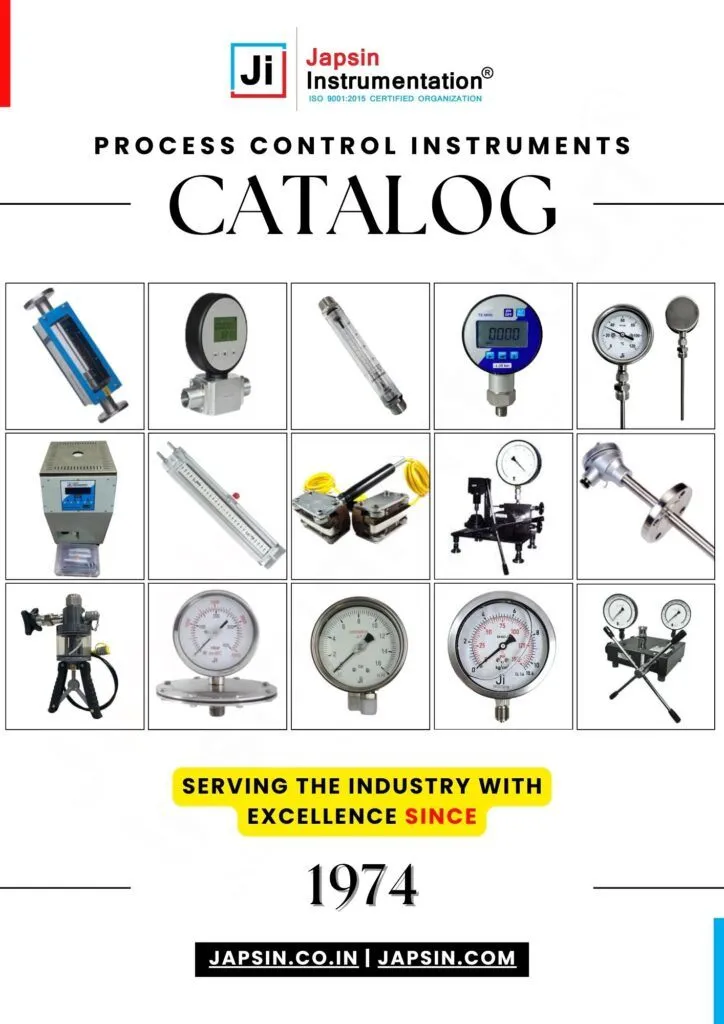
Many of these devices are manufactured and supplied by Japsin Instrumentation, making them a trusted partner for automation engineers across industries.
Real-World Applications of Field Automation Engineers
Field automation engineers play a pivotal role in diverse industries. Here’s how their expertise translates to real-world impact:
1. Oil & Gas
- Monitoring wellhead pressure with precision gauges.
- Automating pipeline flow control using rotameters and transmitters.
- Ensuring safety with explosion-proof instrumentation.
2. Chemical and Petrochemical
- Maintaining reactor temperature and pressure.
- Implementing accurate dosing systems with flow and level instrumentation.
- Preventing hazards with robust monitoring systems.
3. Pharmaceuticals
- Maintaining cleanroom compliance with validated sensors.
- Monitoring temperature and humidity in storage and production.
- Ensuring quality with traceable calibration instruments.
4. HVAC and Building Automation
- Monitoring airflow with rotameters.
- Controlling heating/cooling with temperature sensors.
- Optimizing energy use with automated controls.
5. Power Plants
- Monitoring steam pressure and temperature in turbines.
- Ensuring safety with level instrumentation in boilers.
- Using predictive maintenance to prevent costly shutdowns.
6. Marine and Offshore
- Monitoring ballast tanks with level sensors.
- Maintaining safe pressure levels in fuel systems.
- Using rugged, corrosion-resistant instruments to withstand harsh environments.
Impact of Field Automation Engineers on Industry
1. Accuracy and Efficiency
They ensure every measurement is precise, leading to consistent quality and reduced waste.
2. Safety
By preventing overpressure, leaks, and overheating, they safeguard both people and assets.
3. Predictive Maintenance
Through IIoT-enabled devices, FAEs enable data-driven maintenance strategies, reducing unplanned downtime.
4. Sustainability
Accurate instrumentation reduces resource consumption, energy waste, and environmental impact.
Challenges Faced by Field Automation Engineers
- Working in harsh environments (offshore, chemical exposure, extreme heat).
- Keeping up with rapidly evolving Industry 4.0 technologies.
- Ensuring compatibility between legacy systems and modern IoT devices.
- Balancing cost constraints with the need for reliable instrumentation.
Why Reliable Instrumentation Matters (and How Japsin Instrumentation Helps)
No matter how skilled an engineer is, unreliable instruments can compromise the entire system. This is why choosing a trusted instrumentation supplier like Japsin Instrumentation is critical.
Japsin Instrumentation Value to Field Automation Engineers
- High-quality instruments: Pressure gauges, temperature sensors, rotameters, calibration devices.
- Custom solutions tailored for industry-specific needs.
- Compliance-ready products for oil & gas, pharma, chemical, and power industries.
- Local support in India for quick delivery and service.
By partnering with Japsin Instrumentation, field automation engineers can focus on their core tasks with confidence, knowing they have reliable instrumentation backing them up.
Future of Field Automation Engineers in Industry 4.0
As industries move toward smart factories and digital twins, FAEs will play an even bigger role. Their responsibilities will evolve from manual calibration and troubleshooting to data-driven decision-making and system integration.
Key trends shaping their future:
- AI-driven predictive analytics for maintenance.
- 5G-enabled field communication for real-time monitoring.
- Edge computing in field devices for faster decision-making.
- Green automation for sustainable operations.
Conclusion
The Field Automation Engineer is the unsung hero of modern process industries. Their work ensures that industrial plants run smoothly, safely, and efficiently — from monitoring critical parameters like pressure and temperature to enabling digital transformation with IoT-enabled devices.
In an era defined by Industry 4.0 and smart manufacturing, their role will only grow in importance. But success in this field depends not only on skills and expertise but also on access to reliable instrumentation.
That’s where companies like Japsin Instrumentation make the difference — by delivering precision instruments that empower engineers to excel in their mission of advancing automation, safety, and efficiency in industries worldwide.
Japsin Instrumentation – Since 1974