


Description
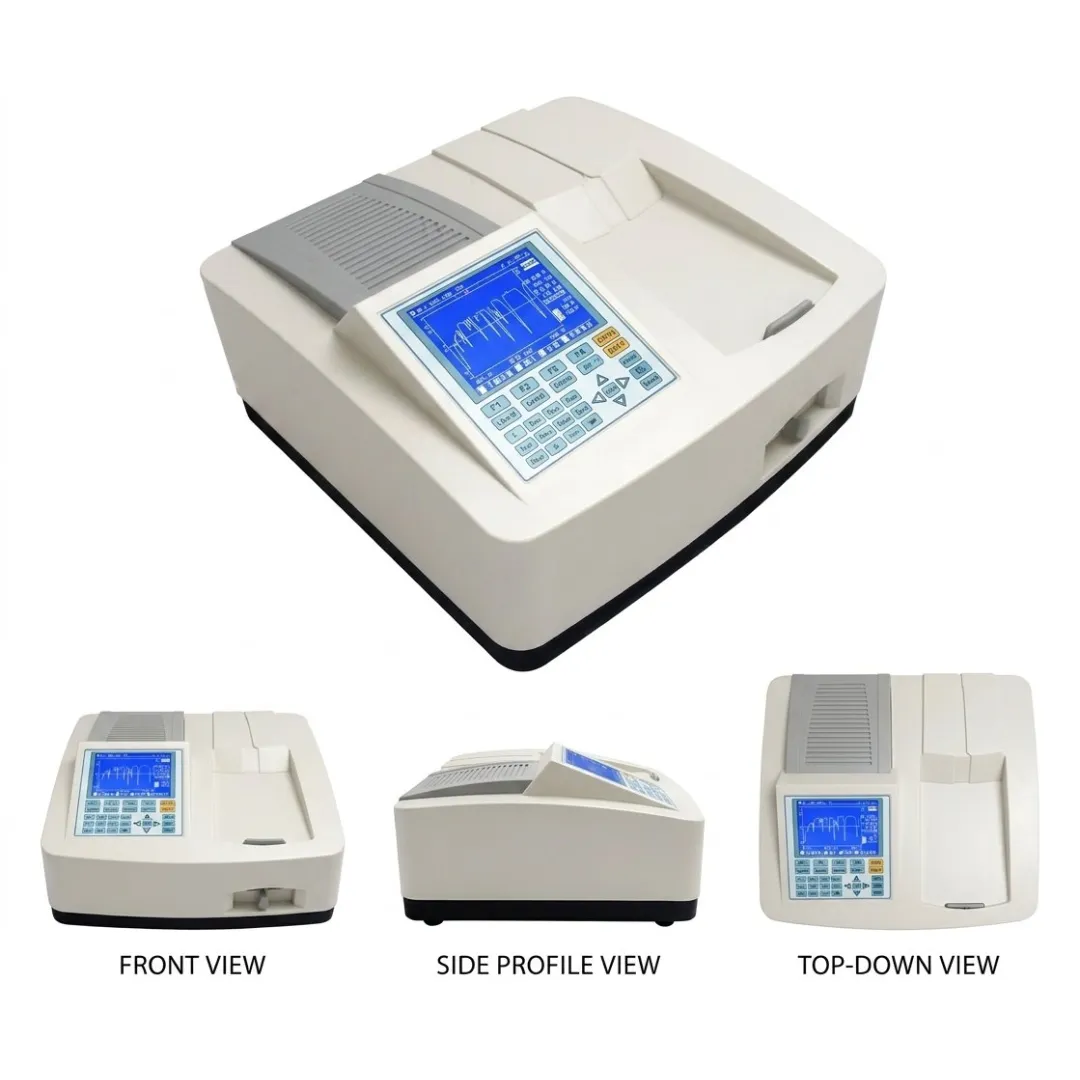
Microprocessor UV-VIS Double Beam Spectrophotometer
The JIPL Microprocessor UV-VIS Double Beam Spectrophotometer is an advanced laboratory analytical instrument designed for measuring the absorbance and transmittance of samples across ultraviolet and visible wavelength regions. Featuring a double-beam optical system, microprocessor-based operation and PC-compatible scanning software, this instrument is suitable for laboratories that require reliable optical measurements, wavelength scanning and analytical testing.
With a wide wavelength range of 190–1100 nm, the spectrophotometer supports a broad variety of laboratory applications in pharmaceutical analysis, chemical research, biotechnology, environmental testing, educational institutions, industrial quality control and material analysis.
Its double-beam optical arrangement helps compensate for variations in the light source and reference beam, making it suitable for measurements and longer-duration testing. The instrument combines automatic wavelength setting, a high-resolution graphic LCD, a silicon photodiode detector and dedicated UV Analyst scanning software to support convenient operation and data analysis.
Double-Beam Optical System
The JIPL UV-VIS Spectrophotometer uses a double-beam optical configuration designed to improve measurement stability. In a double-beam system, the optical signal is divided between the sample and reference paths. Comparing these signals helps compensate for changes in lamp intensity and variations in the reference or blank measurement.
This arrangement is particularly useful for extended measurements, repeated sample analysis and wavelength scanning. It can help reduce the effect of baseline drift and support more consistent readings during routine laboratory operations.
The optical system incorporates a 1200 lines/mm blazed holographic grating, which separates light into its component wavelengths. With a specified spectral bandwidth of 1 nm, the instrument is designed for analytical procedures requiring relatively narrow wavelength selection.
Wide UV and Visible Wavelength Range
The instrument operates over a wavelength range of 190–1100 nm, covering ultraviolet and visible regions and extending into the near-infrared range. This broad wavelength capability makes it suitable for laboratories working with different sample types and analytical methods.
The automatic wavelength-setting function provides a wavelength resolution of 0.1 nm. This helps operators select the required wavelength conveniently for routine measurements and analytical procedures.
The published wavelength accuracy is ±0.5 nm, while wavelength repeatability is specified as ≤0.2 nm. These specifications support applications where controlled wavelength selection and repeatable measurement conditions are important.
Absorbance, Transmittance and Concentration Measurement
The JIPL Double Beam Spectrophotometer supports several photometric measurement ranges, including transmittance, absorbance and concentration. Its specified photometric range is 0–200%T, -4 to +4A and 0–9999C.
These measurement functions are useful for evaluating the optical properties of prepared samples and carrying out quantitative analysis using suitable analytical methods. The instrument also supports calibration curve fitting using standards, with single- or dual-wavelength options as described by the manufacturer.
The published photometric accuracy is ±0.002 A in the 0–0.5 A range, ±0.003 A in the 0.5–1 A range and ±0.3%T for 0–100% transmittance. Actual analytical results depend on sample preparation, calibration, cuvette condition and the selected testing method.
PC-Based Wavelength Scanning and Software
The spectrophotometer is supplied with UV Analyst Scanning Software, which provides PC-based wavelength scanning functionality. This allows users to perform scanning operations through compatible computer software rather than relying only on the instrument’s front-panel controls.
The manufacturer also describes curve fitting using standards with single- or dual-wavelength options. These capabilities can support laboratory workflows involving standard preparation, sample comparison and quantitative analysis.
A USB interface is provided for computer connectivity. The instrument also lists support for a mini serial printer and a PC printer. Users should confirm software compatibility, supported operating systems, installation requirements and available data-export functions before purchase.
Graphic LCD Display and User-Friendly Controls
The instrument features a 320 × 240-dot graphic LCD display and a 30-key alphanumeric membrane keypad. This arrangement provides a dedicated interface for instrument operation and parameter selection.
The keypad allows users to enter operating information and navigate available functions. The graphic display presents instrument information in a readable format, supporting routine laboratory testing and measurement workflows.
Stable Performance for Laboratory Testing
The instrument is designed with performance specifications that support controlled spectrophotometric measurements. It has a stated baseline flatness of ±0.0015 A and stability of ±0.001 A per hour at 500 nm and 0 A.
Its stray-light specification is ≤0.05%T at 220/360 nm. The published noise specifications are ≤0.2%T over three minutes at 250/500 nm and 0%T, and ≤0.5%T over three minutes at 250/500 nm and 100%T.
The instrument includes pre-aligned tungsten and deuterium lamps, supporting operation across the specified wavelength range. Lamp condition, instrument warm-up, baseline correction and routine maintenance remain important for obtaining dependable results.
Sample Compartment and Cuvette Compatibility
The sample compartment is designed for cuvettes with a standard 10 mm optical path length. The supplied configuration includes four glass cells and two quartz cells.
Glass cells are commonly used for suitable visible-region applications, while quartz cells are appropriate for ultraviolet measurements. Selecting the correct cuvette material for the wavelength and sample is essential for avoiding unwanted absorption from the cell itself.
Applications Across Industries
The JIPL Microprocessor UV-VIS Double Beam Spectrophotometer is suitable for a wide range of laboratory and industrial applications, including:
- Pharmaceutical laboratories: Spectrophotometric analysis of suitable drug formulations, raw materials and prepared solutions.
- Chemical industries: Absorbance and transmittance testing for chemical samples and process-related quality checks.
- Environmental laboratories: Optical analysis of prepared water and environmental samples using appropriate methods.
- Educational institutions: Practical demonstrations and research involving UV-visible spectroscopy.
- Biotechnology and research laboratories: Routine optical measurements and sample analysis.
- Food and beverage laboratories: Testing of suitable prepared samples using validated analytical procedures.
- Industrial quality control: Monitoring optical properties and concentration-related parameters of suitable materials.
Standard Accessories and Configuration
The standard configuration published by the manufacturer includes four glass cells, two quartz cells, an instrument cover, software CD, USB cable, operational manual, software manual and software key.
These accessories provide the basic components required for instrument setup and routine laboratory operation. Additional compatible accessories or consumables may be required depending on the analytical method and laboratory requirements.
A Versatile Instrument for Advanced Spectrophotometric Analysis
The JIPL Microprocessor UV-VIS Double Beam Spectrophotometer combines a double-beam optical system, 190–1100 nm wavelength range, 1 nm spectral bandwidth, automatic wavelength setting and PC-based scanning software in one laboratory instrument.
Its broad measurement range, graphic LCD, silicon photodiode detector and pre-aligned tungsten and deuterium lamps make it a suitable option for laboratories seeking an instrument for UV-visible spectrophotometric analysis, wavelength scanning and quantitative testing.
For the best results, users should select the instrument according to their wavelength requirements, sample type, analytical method, cuvette compatibility and software needs. Proper calibration, maintenance and use of suitable reference standards are recommended for dependable laboratory measurements.
Standard accessories
-
Glass cells – 4 Nos.
-
Quartz cells – 2 Nos.
-
Instrument cover – 1 No.
-
Software CD – 1 No.
-
USB cable – 1 No.
-
Operational manual – 1 No.
-
Software manual – 1 No.
- Software key – 1 No.
Japsin Instrumentation – Since 1974


Reviews
There are no reviews yet.