


Description
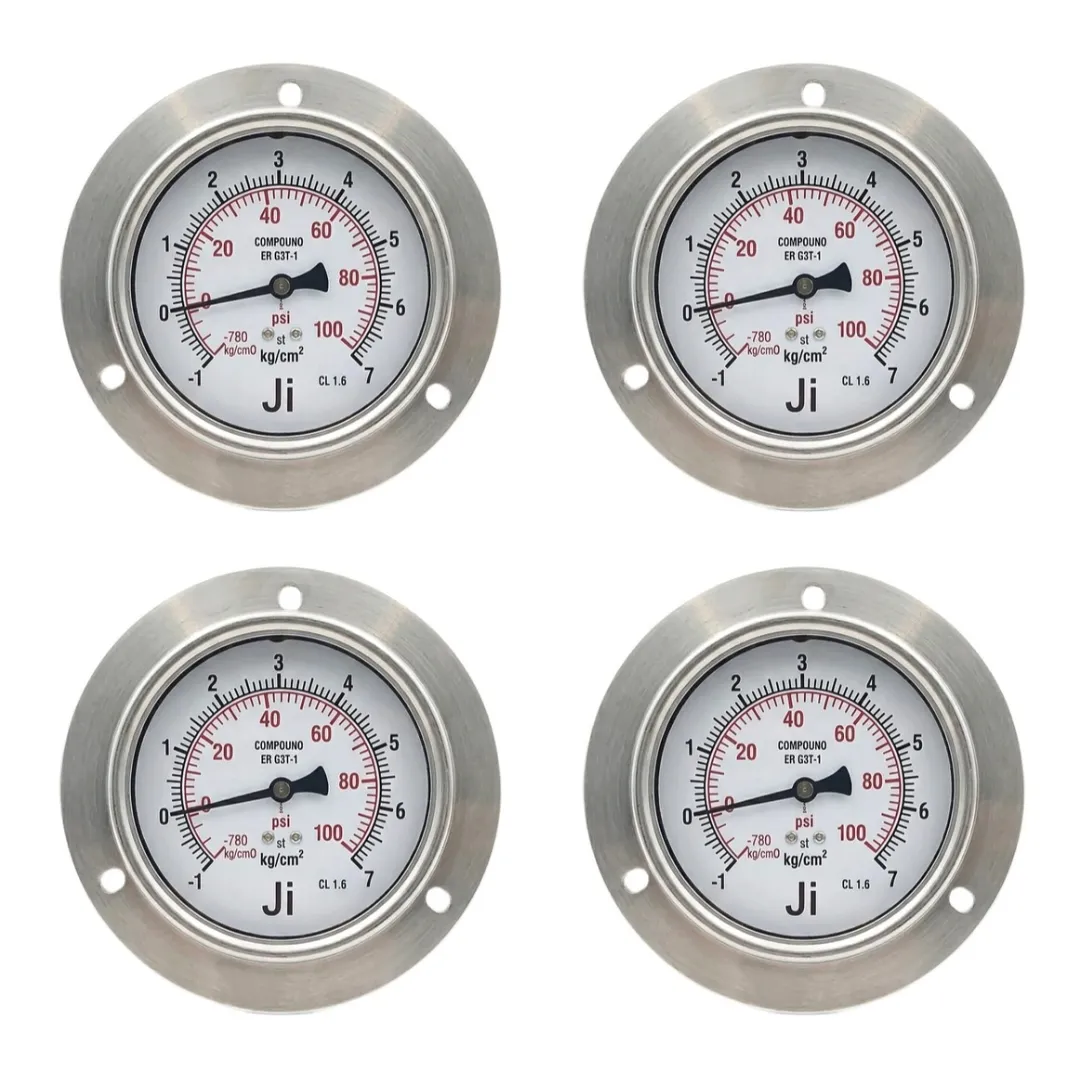
“Ji” Japsin Instrumentation Economical Compound Gauge –1 to 7 kg/cm², 4-Inch Dial, Panel Mounting Back Entry
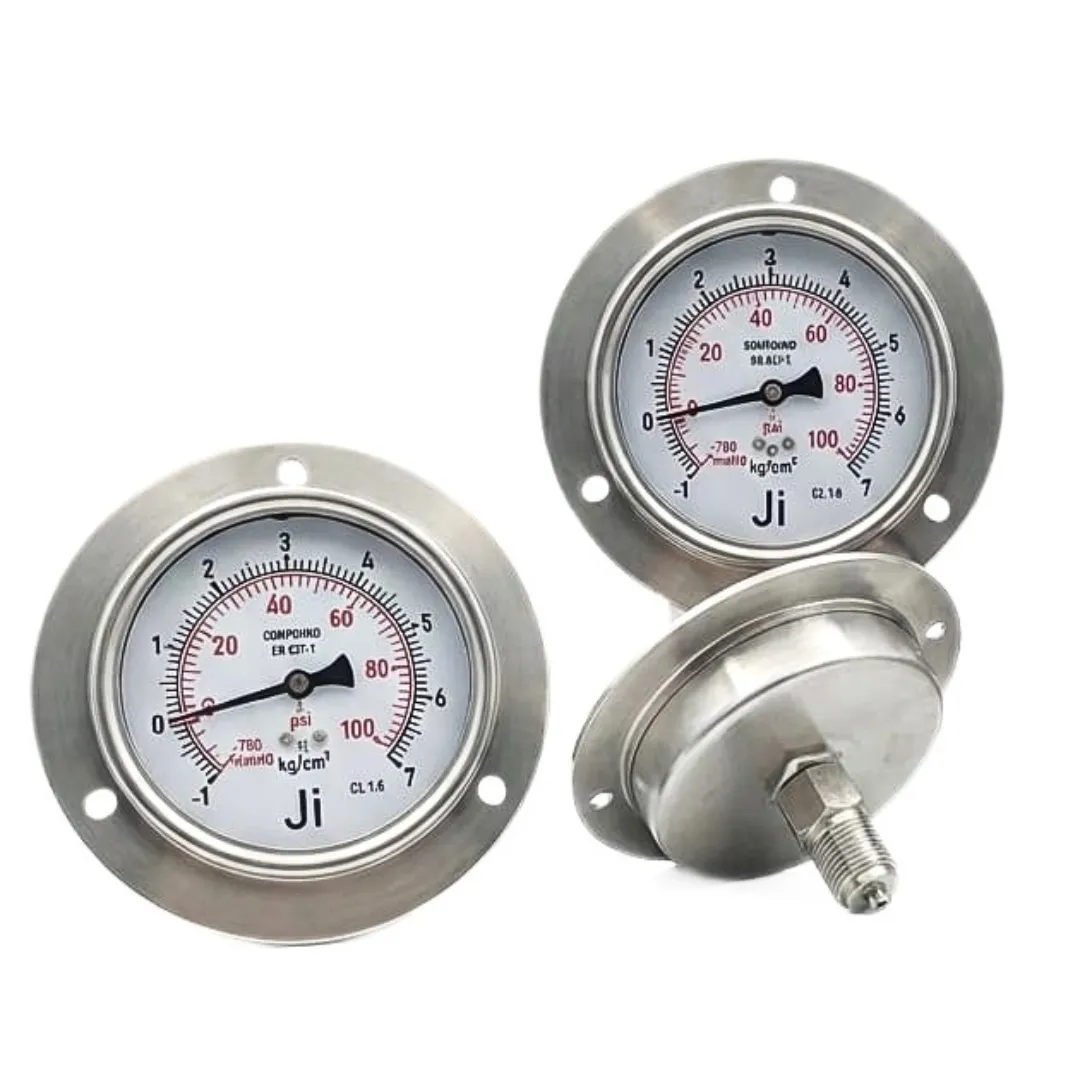
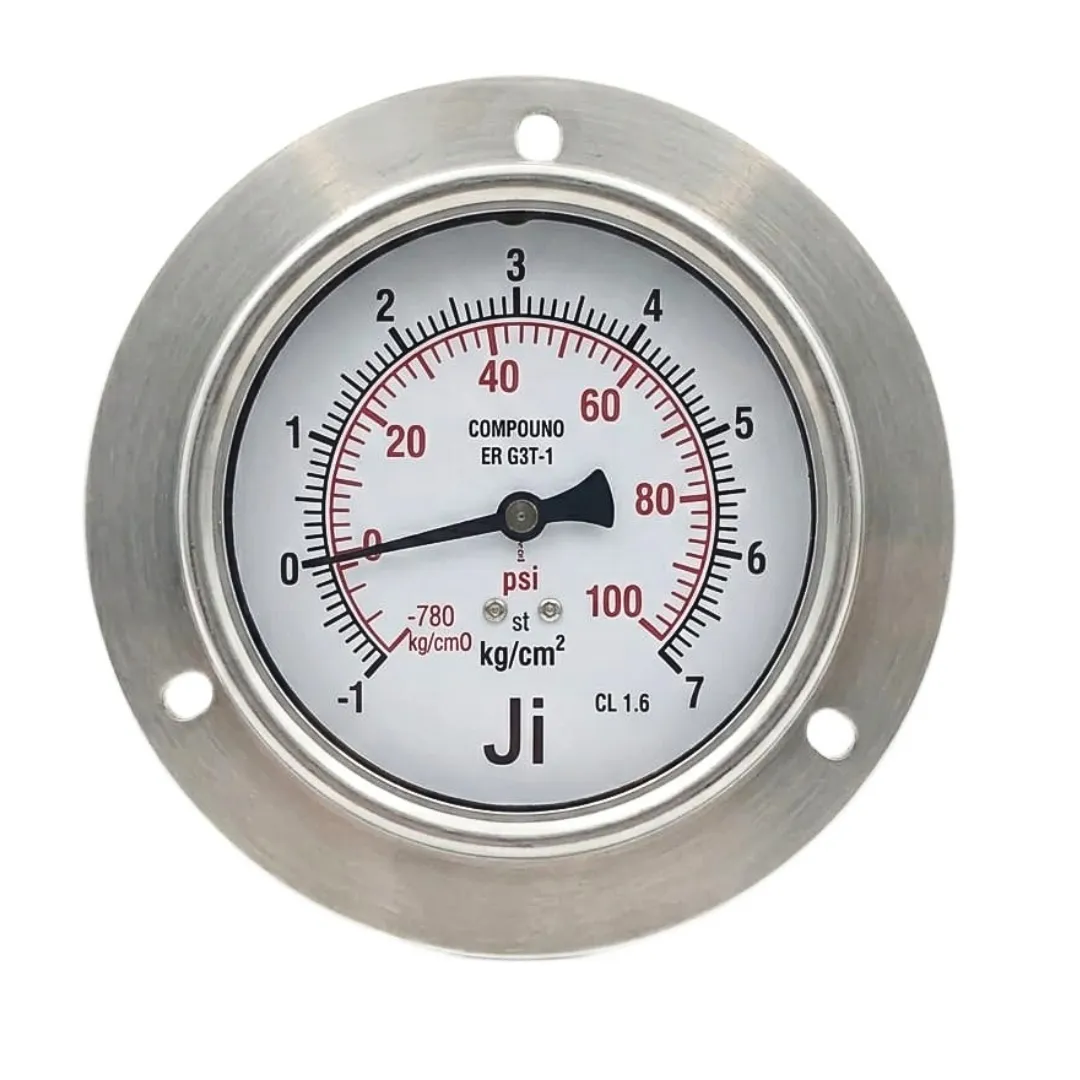
The “Ji” Japsin Instrumentation Economical Compound Gauge is designed for monitoring both vacuum and positive pressure in industrial processes, machinery, pipelines, pumps, compressors, and other compatible pressure systems. Featuring a measuring range of –1 to 7 kg/cm² with a dual scale of –760 mmHg to 100 PSI, this compound pressure gauge enables operators to monitor pressure conditions across vacuum and positive-pressure applications using a single instrument.
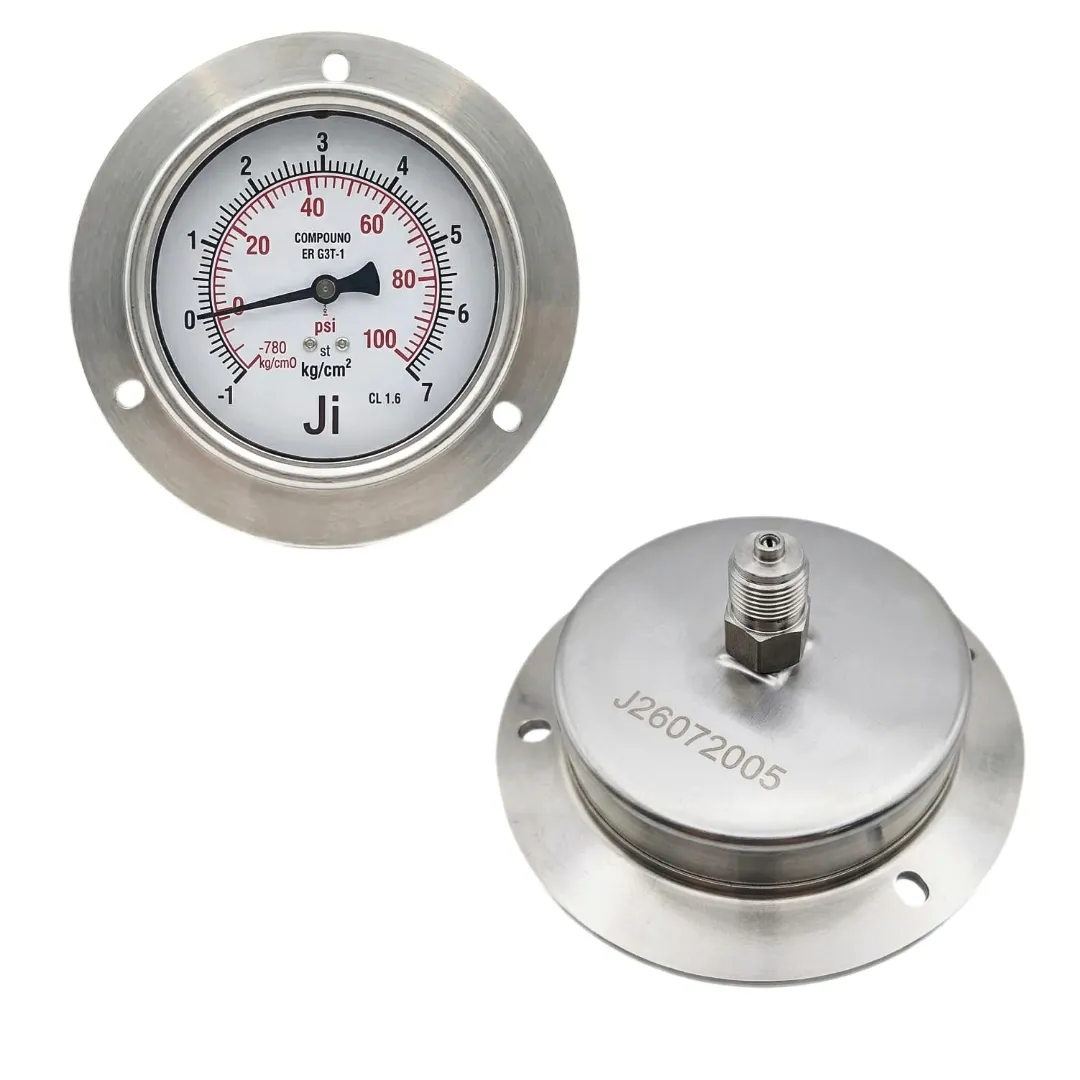
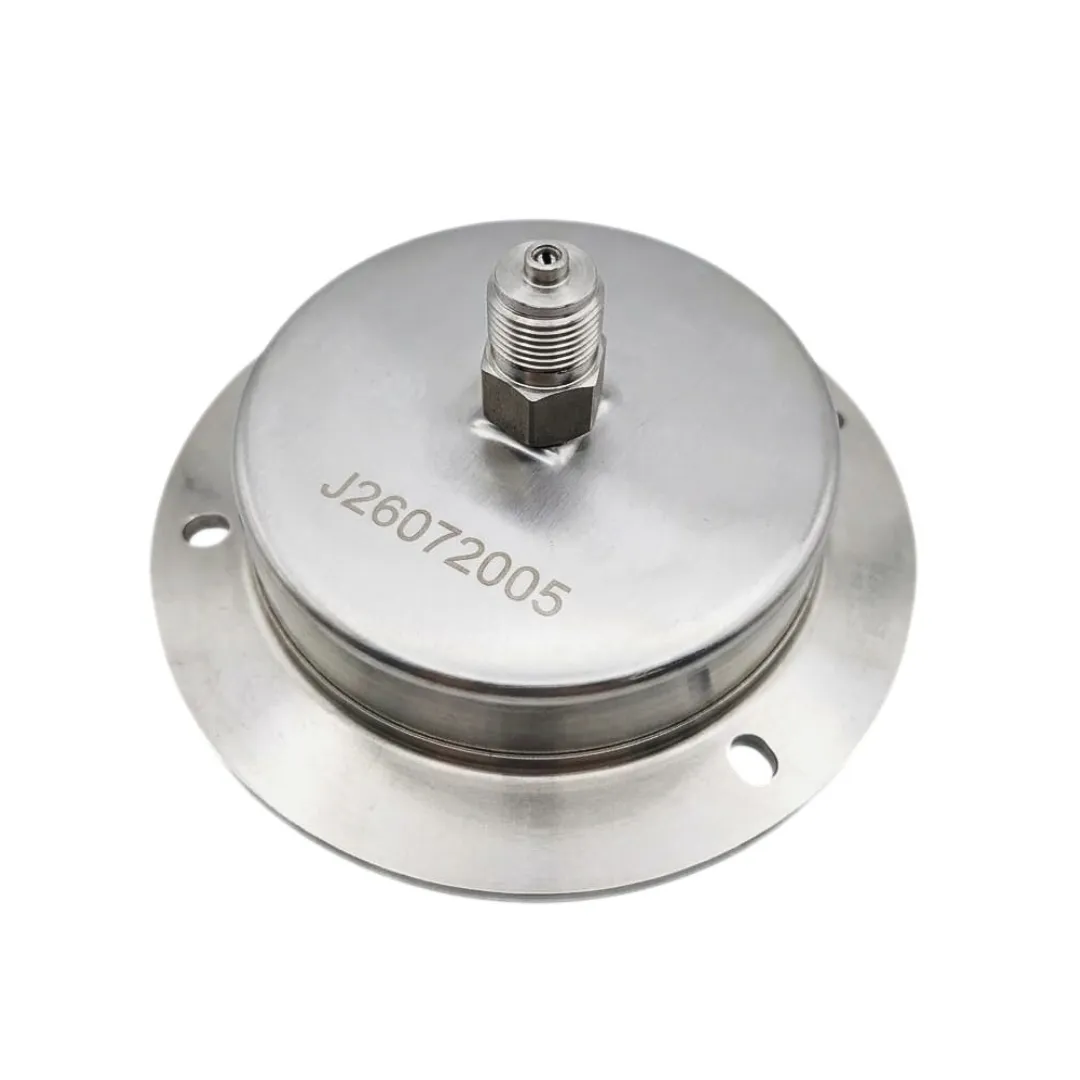
Equipped with a large 4-inch (100 mm) dial, the gauge provides a clear display for routine pressure monitoring. Its panel-mounting back-entry configuration makes it suitable for control panels, equipment enclosures, and industrial systems where the pressure connection is located behind the dial. The instrument features a 3/8-inch BSP male connection, a stainless steel case, and stainless steel wetted parts. Its case crimping construction provides a fixed enclosure for the internal measuring mechanism.
The “Ji” Economical Compound Gauge is a practical choice for industrial users seeking a mechanical pressure indication solution for applications where both vacuum and positive pressure need to be observed. Its dual-scale display supports readings in different commonly used pressure units, making it convenient for operators, technicians, maintenance teams, and plant personnel.
Key Features and Benefits
1. Compound Pressure Measurement
A compound pressure gauge is used to measure both vacuum pressure and positive pressure. Unlike a standard pressure gauge that measures only positive pressure, this instrument covers a range extending below and above atmospheric pressure.
With a specified range of –1 to 7 kg/cm², it can be used in compatible systems where vacuum conditions and positive pressure occur during different stages of operation. This makes it useful for monitoring pressure changes in equipment such as vacuum pumps, suction lines, and pressure systems.
2. Dual-Scale Display
The gauge features a dual-scale dial with readings in kg/cm² and PSI/mmHg as specified. The primary range is –1 to 7 kg/cm², while the additional scale is specified as –760 mmHg to 100 PSI.
The dual-scale arrangement allows operators to interpret readings using different pressure units without requiring manual conversion. This can be particularly helpful in industrial facilities where equipment documentation, operating procedures, and maintenance records use different measurement systems.
3. Large 4-Inch Dial for Clear Readability
The instrument is supplied with a 4-inch (100 mm) dial, providing a larger viewing area for pressure indication. A larger dial can be advantageous in control panels and industrial installations where operators need to observe readings from a reasonable viewing distance.
The analog pointer display allows users to monitor pressure conditions during routine inspections, equipment operation, and maintenance activities.
4. Stainless Steel Case Construction
The gauge features a stainless steel case designed to protect the internal measuring mechanism. Stainless steel is widely used in industrial instrumentation because of its durability and suitability for many general industrial environments.
The case is manufactured with a crimping-type construction, in which the case components are secured through a crimped joint. This provides a fixed enclosure for the instrument.
5. Stainless Steel Wetted Parts
The wetted parts are made from stainless steel and are intended for contact with the measured process medium. Stainless steel construction is commonly selected for industrial pressure instruments because of its corrosion resistance and mechanical durability.
However, material compatibility depends on the actual process fluid, its concentration, temperature, and operating conditions. Always verify that the wetted materials are suitable for the intended application before installation.
6. Panel Mounting with Back Entry
The panel-mounting back-entry arrangement is designed for installation through a suitable panel opening, with the pressure connection extending from the rear of the gauge. This configuration is useful for control cabinets, machinery panels, and equipment enclosures where front-facing pressure indication is preferred.
The panel mounting arrangement helps position the dial for convenient observation while keeping the process connection behind the panel.
7. 3/8-Inch BSP Male Connection
The instrument is supplied with a 3/8-inch BSP male threaded connection for connection to compatible pressure lines, fittings, or process connections. Before installation, confirm that the mating connection uses the correct BSP thread specification and size.
Correct thread matching and appropriate sealing practices are important to help prevent leakage and support reliable operation.
Working Principle of a Compound Gauge
The compound gauge operates through a mechanical pressure-sensing element, typically a Bourdon tube. When pressure or vacuum is applied through the instrument connection, the sensing element responds to the change in pressure. Its mechanical movement is transferred through a linkage and gear mechanism to the pointer.
Under vacuum conditions, the pointer moves into the negative-pressure portion of the dial. Under positive pressure, it moves into the positive-pressure portion. The operator can therefore observe both vacuum and positive pressure on the same instrument.
This mechanical operating principle allows pressure indication without requiring an external electrical power supply.
Industrial Applications
The “Ji” Japsin Economical Compound Gauge can be considered for a range of compatible industrial applications, including:
- Vacuum pumps: Monitoring suction and vacuum pressure conditions.
- Pumping systems: Observing pressure changes on suitable suction and discharge lines.
- Compressors: Monitoring pressure conditions in compatible systems.
- Industrial machinery: Providing local pressure indication for equipment operation.
- Process pipelines: Monitoring vacuum and positive pressure at selected measurement points.
- Manufacturing facilities: Supporting routine process monitoring and maintenance inspections.
- Utility systems: Measuring pressure conditions in compatible industrial utility applications.
The gauge should be selected according to the process medium, pressure range, temperature, vibration level, and installation requirements.
Installation and Maintenance Recommendations
Install the gauge at a location where the dial can be read easily and safely. Ensure that the panel opening and mounting arrangement are suitable for the 100 mm dial instrument. Check the 3/8-inch BSP male connection for correct thread compatibility before connecting it to the process line.
Avoid applying excessive force to the gauge case during installation. Where pressure pulsation or mechanical vibration is present, evaluate whether additional protective accessories or a different gauge configuration is required.
Regularly inspect the instrument for visible damage, pointer movement irregularities, leakage at the connection, and signs of corrosion. For critical applications, follow an appropriate inspection and calibration schedule based on plant requirements.
Why Choose “Ji” Japsin Instrumentation?
Japsin Instrumentation offers industrial measurement instruments for pressure and process monitoring applications. The “Ji” Economical Compound Gauge combines a vacuum and positive-pressure measuring range, dual-scale indication, a large 4-inch dial, stainless steel construction, and panel-mounting back-entry design.
For industrial buyers, maintenance professionals, and equipment manufacturers, selecting the correct pressure range, dial size, connection type, mounting arrangement, and wetted material is essential. This compound gauge provides a mechanical indication option for compatible applications requiring both vacuum and positive-pressure monitoring.
Choose the “Ji” Japsin Instrumentation Economical Compound Gauge for practical local pressure indication in suitable industrial systems.
Japsin Instrumentation – Since 1974


Reviews
There are no reviews yet.