


Description
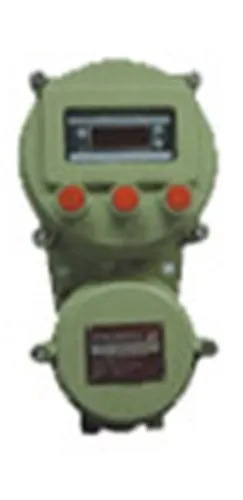
Micron FLP-DTC Flame Proof Temperature Controller
The Micron FLP-DTC Flame Proof Temperature Controller is a robust industrial temperature control instrument designed for temperature monitoring and control in hazardous and potentially explosive industrial environments. It is developed for applications where conventional temperature controllers may not be suitable because the installation area requires flameproof electrical equipment.
The FLP-DTC is equipped with a Pt100 RTD input and is available in temperature ranges of 50 to 400°C or -50 to 400.0°C. Its flameproof enclosure is specified as CMRI certified for Gas Groups I, IIA and IIB, making it suitable for consideration in selected hazardous-area applications such as oil and gas plants, refineries, petrochemical facilities, chemical processing units, and other industrial process installations.
Temperature control is an important part of many industrial operations. Excessive temperature can affect product quality, equipment performance, process efficiency, and operational safety. The FLP-DTC provides a dedicated solution for controlling temperature where a flameproof enclosure is required.
Flame Proof Temperature Controller for Hazardous Areas
The primary purpose of the FLP-DTC Flame Proof Controller is to provide temperature control in industrial locations where flammable gases or vapours may be present.
A flameproof enclosure is designed to contain an ignition that may occur within the enclosure and prevent the ignition from propagating to the surrounding hazardous atmosphere, subject to the applicable certification, installation conditions, and equipment limitations.
This makes flameproof instrumentation an important part of instrumentation systems used in classified industrial areas.
The FLP-DTC can therefore be considered for suitable applications where temperature control equipment must be installed in a hazardous location.
Important: The actual suitability of the controller must always be verified against the hazardous-area classification, gas group, temperature class, certification marking, ambient conditions, and applicable local regulations before installation.
Pt100 RTD Temperature Input
The Micron FLP-DTC uses a Pt100 resistance temperature detector (RTD) as its temperature input.
Pt100 sensors are widely used throughout industrial process instrumentation because they provide stable and repeatable temperature measurement.
A Pt100 sensor operates by changing its electrical resistance according to temperature. The controller uses the resistance value from the sensor to determine the process temperature and apply the required control function.
Pt100 sensors are commonly found in:
- Industrial process plants
- Chemical processing equipment
- Oil and gas installations
- Refineries
- Petrochemical plants
- Storage tanks
- Process vessels
- Heating systems
- Industrial machinery
- Ovens and thermal equipment
- Food-processing machinery
- Pharmaceutical equipment
The Pt100 input therefore makes the FLP-DTC suitable for a broad range of temperature-control applications.
Available Temperature Ranges
The FLP-DTC is specified with two temperature range options to accommodate different process requirements.
50 to 400°C
This range is suitable for processes where the operating temperature remains within a higher-temperature industrial range.
Potential applications include:
- Process heating
- Industrial ovens
- Heating chambers
- Process vessels
- Thermal processing equipment
- Industrial heaters
-50 to 400.0°C
This option provides a wider operating range extending from sub-zero temperatures up to 400°C.
It can be considered for processes where temperatures may vary significantly, including applications involving cooling and heating.
Selecting the correct temperature range is important for achieving appropriate measurement and control performance.
Temperature Control in Industrial Processes
The FLP-DTC is designed as a temperature controller, rather than simply a temperature indicator.
In a typical application, a Pt100 sensor is installed at the process measurement point. The sensor detects the actual process temperature and provides the corresponding signal to the FLP-DTC.
The controller compares the measured temperature against the desired control condition and operates the associated control system.
A typical arrangement can be represented as:
Process → Pt100 Sensor → FLP-DTC Controller → Control Equipment → Process
This closed-loop arrangement helps maintain the desired temperature within the operating requirements of the application.
Applications in Oil & Gas Industries
Oil and gas facilities often contain classified areas where flameproof instrumentation is required.
The FLP-DTC can be considered for suitable temperature-control applications associated with:
- Oil processing equipment
- Gas processing systems
- Heating systems
- Process vessels
- Storage tanks
- Pipeline systems
- Fuel handling systems
- Pumping facilities
- Process machinery
Temperature control can be important in these applications for maintaining process conditions and protecting equipment from unsuitable operating temperatures.
Refinery Applications
Refineries involve numerous thermal processes and hazardous-area locations.
The FLP-DTC can be considered for selected applications involving:
- Process heaters
- Storage vessels
- Heating systems
- Process tanks
- Oil processing equipment
- Thermal process systems
The flameproof construction provides a suitable form of enclosure for applications where certified hazardous-area equipment is required.
Petrochemical and Chemical Industries
Temperature is often a critical process parameter in chemical and petrochemical manufacturing.
Maintaining the correct process temperature can affect:
- Product consistency
- Reaction conditions
- Process efficiency
- Equipment operation
- Production quality
The FLP-DTC may be used with Pt100 sensors for suitable temperature-control points in:
- Reactors
- Process vessels
- Chemical tanks
- Heating equipment
- Thermal processing systems
- Storage systems
The exact suitability depends on the process conditions and hazardous-area classification.
Local Temperature Control
One important advantage of a flameproof temperature controller is the ability to locate the control instrument close to the process.
Local control can be useful during:
- Plant operation
- Commissioning
- Maintenance
- Troubleshooting
- Process adjustment
- Equipment inspection
A local controller can complement a centralized automation system by providing temperature control at the field location.
Robust Flameproof Construction
The FLP-DTC is designed around a flameproof industrial enclosure.
The enclosure provides a protective housing for the controller and is intended for use in demanding industrial environments where suitable flameproof protection is required.
The supplied specification states that the flameproof enclosures are CMRI certified for Gas Groups I, IIA and IIB.
Certification is an important consideration when selecting instrumentation for hazardous locations. Users should verify the applicable certification documentation and ensure that the selected instrument is appropriate for the exact hazardous area.
CMRI Certification and Gas Groups
According to the supplied product information, the FLP-DTC flameproof enclosure is CMRI certified for Gas Groups I, IIA and IIB.
These classifications are relevant to hazardous environments containing different types of potentially explosive gases.
However, certification should always be evaluated together with the complete installation requirements. Factors such as area classification, gas group, temperature class, ambient temperature, enclosure rating, cable entry, wiring method, and installation practices can affect equipment suitability.
The FLP-DTC should therefore be installed only in applications for which its certification and technical documentation are appropriate.
Industrial Applications
The Micron FLP-DTC can be considered for a variety of temperature-control applications, including:
1. Oil & Gas
Temperature control in suitable classified process areas.
2. Refineries
Process heating and temperature regulation.
3. Petrochemical Plants
Temperature management for selected process equipment.
4. Chemical Plants
Temperature control of suitable reactors, vessels, tanks, and heating systems.
5.Gas Processing
Temperature control for selected gas-processing equipment.
6. Industrial Process Plants
Temperature regulation in hazardous-area process systems.
7. Heating Equipment
Control of suitable industrial heating systems equipped with Pt100 sensors.
Key Features and Benefits
The Micron FLP-DTC provides several important features for industrial users:
- Flameproof temperature controller
- Pt100 RTD input
- CMRI-certified flameproof enclosure as specified
- Gas Group I, IIA and IIB certification as specified
- Temperature range up to 400°C
- Wider range option from -50 to 400.0°C
- Suitable for hazardous-area applications
- Local temperature control
- Robust industrial construction
- Suitable for process industries
- Suitable for oil and gas applications
- Suitable for refinery and petrochemical environments
- Pt100-based temperature measurement
- Practical solution for field temperature control
Why Choose Micron FLP-DTC?
The Micron FLP-DTC Flame Proof Temperature Controller is a practical choice for industrial applications where temperature control and flameproof construction are required together.
Its Pt100 input makes it compatible with one of the most commonly used industrial RTD sensors, while the available ranges up to 400°C provide flexibility for different process applications.
The stated CMRI certification for Gas Groups I, IIA and IIB makes the product suitable for consideration in selected hazardous environments, subject to verification of the complete certification and installation requirements.
For instrumentation engineers, maintenance teams, OEM manufacturers, process industries, oil and gas companies, chemical plants, and refinery operators, the FLP-DTC provides a dedicated temperature-control solution for appropriate hazardous-area installations.
Japsin Instrumentation – Since 1974


