

India is rapidly emerging as one of the world’s largest industrial and manufacturing hubs. With initiatives such as Make in India, Digital India, Smart Manufacturing, and the increasing adoption of Industry 4.0 technologies, the demand for advanced process instrumentation has grown significantly across various sectors.
Process instrumentation plays a vital role in ensuring safety, efficiency, quality control, and operational excellence. Whether it is a refinery monitoring pressure, a pharmaceutical company controlling temperature, a water treatment plant measuring flow, or a power plant monitoring level, instrumentation serves as the foundation of industrial process control.
As Indian industries continue modernizing their facilities, several new trends are shaping the future of process instrumentation. These trends are driving higher productivity, reduced downtime, better energy efficiency, and improved regulatory compliance.
This comprehensive guide explores the most important process instrumentation trends in India and how they are transforming industrial operations.
Table of Contents
Understanding Process Instrumentation
Process instrumentation refers to the devices and systems used to measure, monitor, and control process variables such as:
- Pressure
- Temperature
- Flow
- Level
- Humidity
- Density
- Conductivity
- pH
- Vibration
These instruments provide critical information that allows operators and automated systems to maintain process stability and efficiency.
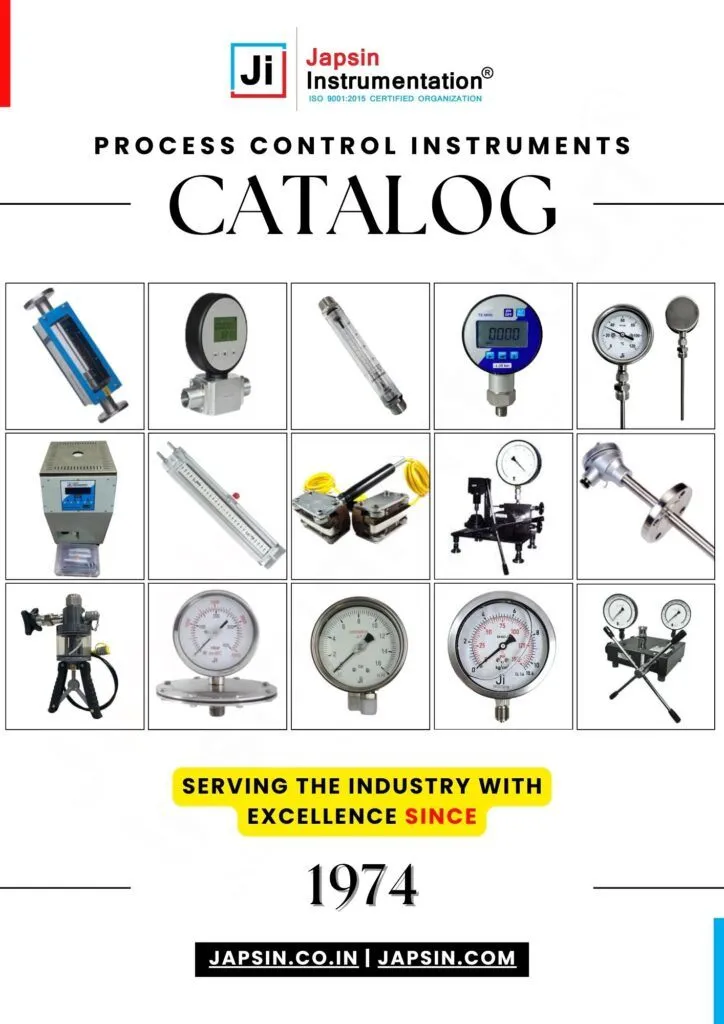
Typical process instrumentation includes:
- Pressure Gauges
- Pressure Transmitters
- Temperature Gauges
- RTDs
- Thermocouples
- Flow Meters
- Rotameters
- Level Sensors
- Level Switches
- Calibration Instruments
- Controllers
- Data Loggers
The future of these devices is becoming increasingly digital, intelligent, and connected.
The Growth of Industrial Automation in India
India’s manufacturing sector is experiencing significant transformation.
Industries are investing heavily in:
- Smart factories
- Automated production lines
- Industrial IoT
- Digital process control
- Energy optimization
- Predictive maintenance systems
This industrial shift is creating enormous demand for advanced instrumentation solutions.
Modern plants require instruments that can not only measure but also communicate, analyze, and support decision-making processes.
Trend 1: Adoption of Industry 4.0 Technologies
One of the biggest trends in Indian process industries is the implementation of Industry 4.0.
Industry 4.0 focuses on:
- Connected manufacturing
- Data-driven operations
- Cyber-physical systems
- Smart automation
- Real-time analytics
Instrumentation serves as the primary data source for Industry 4.0 initiatives.
Smart sensors continuously collect process information and transmit data to centralized systems for analysis and optimization.
Industries such as pharmaceuticals, chemicals, food processing, automotive, and oil & gas are increasingly adopting Industry 4.0-based instrumentation solutions.
Trend 2: Smart Pressure Instruments
Traditional pressure gauges are gradually being supplemented by smart pressure instruments.
Modern pressure monitoring solutions offer:
- Digital displays
- Wireless communication
- High accuracy
- Data logging
- Predictive diagnostics
Smart pressure gauges and transmitters enable operators to monitor system conditions remotely while improving maintenance planning and operational efficiency.
Many Indian manufacturing facilities are replacing legacy mechanical gauges with digital pressure monitoring systems.
Trend 3: Wireless Instrumentation
Wireless instrumentation is becoming increasingly popular across Indian industries.
Traditional wired systems often involve:
- High installation costs
- Complex cabling
- Difficult maintenance
Wireless instruments eliminate many of these challenges.
Benefits include:
- Faster installation
- Reduced wiring expenses
- Greater flexibility
- Remote monitoring capability
- Improved scalability
Wireless pressure, temperature, level, and flow instruments are becoming common in large industrial facilities.
Trend 4: Industrial Internet of Things (IIoT)
The Industrial Internet of Things has become one of the most significant developments in process instrumentation.
IIoT enables instruments to communicate through industrial networks and cloud platforms.
Key benefits include:
- Real-time monitoring
- Remote diagnostics
- Data analytics
- Predictive maintenance
- Asset optimization
Indian industries are increasingly implementing IIoT-enabled sensors to improve productivity and reduce operational risks.
Trend 5: Predictive Maintenance Using Instrumentation Data
Traditionally, maintenance activities were either reactive or scheduled.
Today, predictive maintenance is becoming the preferred strategy.
Process instruments continuously monitor equipment conditions and generate valuable operational data.
Advanced analytics help identify:
- Pressure abnormalities
- Temperature deviations
- Flow inconsistencies
- Equipment degradation
This allows maintenance teams to address issues before failures occur.
Benefits include:
- Reduced downtime
- Lower maintenance costs
- Improved equipment reliability
- Extended asset life
Trend 6: Advanced Flow Measurement Technologies
Flow measurement is undergoing major advancements in India.
Industries are increasingly adopting:
- Electromagnetic Flow Meters
- Ultrasonic Flow Meters
- Coriolis Flow Meters
- Thermal Mass Flow Meters
- Vortex Flow Meters
These technologies offer:
- Higher accuracy
- Better repeatability
- Reduced maintenance
- Digital communication capabilities
Advanced flow meters are becoming essential in water treatment, pharmaceuticals, chemicals, and energy sectors.
Trend 7: Growth of Smart Temperature Monitoring
Temperature control remains one of the most important process parameters.
Modern temperature instrumentation now includes:
- Smart RTDs
- Intelligent Thermocouples
- Wireless Temperature Sensors
- Digital Temperature Transmitters
Industries are leveraging these technologies to improve process quality and energy efficiency.
Smart temperature monitoring is particularly important in:
- Pharmaceuticals
- Food processing
- Chemical manufacturing
- Boilers
- HVAC systems
Trend 8: Increased Demand for Calibration Instruments
As industries demand higher accuracy and compliance, calibration instruments are becoming increasingly important.
Growing demand exists for:
- Pressure Calibrators
- Temperature Calibrators
- Multifunction Calibrators
- Pneumatic Calibrators
- Hydraulic Calibrators
Regular calibration ensures:
- Measurement accuracy
- Product quality
- Regulatory compliance
- Process reliability
Indian industries are investing heavily in calibration laboratories and portable calibration equipment.
Trend 9: Digital Calibration Management
Calibration practices are evolving from paper-based systems to digital management platforms.
Digital calibration systems offer:
- Electronic records
- Automated scheduling
- Traceability
- Compliance documentation
Benefits include:
- Reduced paperwork
- Improved audit readiness
- Better maintenance planning
This trend is particularly strong in pharmaceutical and regulated industries.
Trend 10: Smart Level Measurement Solutions
Modern level measurement technologies are replacing traditional methods.
Popular solutions include:
- Radar Level Transmitters
- Guided Wave Radar
- Ultrasonic Level Sensors
- Magnetic Level Indicators
- Hydrostatic Level Transmitters
These technologies provide:
- Higher accuracy
- Remote monitoring
- Improved safety
- Better inventory control
Industries handling chemicals, fuels, water, and bulk materials are increasingly adopting advanced level instrumentation.
Trend 11: Integration with PLC and SCADA Systems
Modern process instruments are designed to integrate seamlessly with:
- PLC Systems
- SCADA Platforms
- DCS Systems
- Cloud Applications
This integration enables centralized monitoring and process control.
Operators can access real-time data, alarms, and trends from a single dashboard, improving decision-making and operational visibility.
Trend 12: Energy Efficiency Through Instrumentation
Energy management is becoming a major priority across Indian industries.
Instrumentation supports energy efficiency by monitoring:
- Steam consumption
- Compressed air usage
- Water consumption
- Fuel flow
- Heat transfer performance
Accurate measurement helps organizations identify inefficiencies and reduce operating costs.
Trend 13: Cybersecurity for Smart Instruments
As instruments become more connected, cybersecurity is becoming increasingly important.
Industrial facilities are implementing:
- Secure communication protocols
- Network segmentation
- Authentication systems
- Data encryption
Protecting instrumentation networks from cyber threats is becoming a critical aspect of industrial operations.
Trend 14: Sustainable Manufacturing and Green Instrumentation
Sustainability initiatives are driving demand for energy-efficient instrumentation solutions.
Modern instruments help organizations:
- Reduce waste
- Lower emissions
- Optimize resource consumption
- Improve environmental compliance
Green manufacturing practices are expected to further increase instrumentation investments in India.
Trend 15: AI and Machine Learning in Process Control
Artificial Intelligence is beginning to influence process instrumentation.
AI-powered systems can analyze data from thousands of instruments simultaneously.
Applications include:
- Process optimization
- Predictive maintenance
- Anomaly detection
- Quality control
As AI adoption grows, instrumentation will play an even larger role in intelligent manufacturing.
Industries Driving Instrumentation Growth in India
Several sectors are contributing significantly to the growth of process instrumentation.
1. Oil and Gas
Demand for advanced pressure, flow, and level monitoring continues to grow.
2. Pharmaceuticals
Strict quality standards require highly accurate instrumentation.
3. Chemical Processing
Complex processes demand reliable monitoring and automation.
4. Food and Beverage
Instrumentation supports hygiene, quality, and regulatory compliance.
5. Water and Wastewater Treatment
Flow and level measurement systems are essential for efficient operations.
6. Power Generation
Pressure, temperature, and flow monitoring remain critical.
7. Manufacturing
Industry 4.0 initiatives are accelerating instrumentation adoption.
Challenges Facing Process Instrumentation in India
Despite rapid growth, some challenges remain.
1. Skilled Workforce Shortage
Advanced instrumentation requires trained personnel.
2. Integration Complexity
Older facilities may struggle with modernization projects.
3. Initial Investment Costs
Smart instrumentation systems often involve higher upfront costs.
4. Cybersecurity Risks
Connected systems require robust security measures.
However, long-term benefits generally outweigh these challenges.
Future Outlook of Process Instrumentation in India
The future of process instrumentation in India is extremely promising.
Over the next decade, we can expect:
- Greater adoption of Industry 4.0
- Increased use of AI-driven instrumentation
- Expansion of IIoT networks
- Growth in wireless monitoring systems
- Smart calibration technologies
- Cloud-based process management
- Advanced predictive maintenance solutions
Indian industries are expected to continue investing heavily in automation and intelligent measurement technologies.
Conclusion
Process instrumentation in India is undergoing a significant transformation driven by automation, digitalization, Industry 4.0, and smart manufacturing initiatives. Modern industries are moving beyond conventional measurement devices toward intelligent, connected, and data-driven instrumentation systems.
Technologies such as IIoT, wireless sensors, smart transmitters, predictive maintenance, digital calibration, AI-powered analytics, and cloud integration are reshaping how industrial facilities operate.
Organizations that invest in modern process instrumentation benefit from improved efficiency, enhanced safety, reduced downtime, better product quality, and stronger competitive advantages.
As India’s industrial sector continues to expand and modernize, process instrumentation will remain at the heart of operational excellence, making it one of the most important areas of technological advancement in the country’s manufacturing and process industries.
Japsin Instrumentation – Since 1974